
Tampilkan postingan dengan label Room Interior Design. Tampilkan semua postingan
Tampilkan postingan dengan label Room Interior Design. Tampilkan semua postingan
Kamis, 16 Desember 2010
Room Interior Design
How do I set of the room interior design at your home?
Most people's favorite room when it comes to decor, formal sitting room provides the most wonderful opportunity to show your decorating skills and to express your personality.
In all other rooms in the house preoccupation with often usually have to dominate, sometimes at the expense of aesthetic considerations.
 Especially for People Who Just Seeing Things From the good, and the regular can not adjust to one another between the furniture in the room. They just put anything they wanted and liked.
Regular parts not in what you have, but the room interior design of the arrangement is the existence of Good alignment and balance performance. New article so, the atmosphere of your house will look very harmonious.
Most people's favorite room when it comes to decor, formal sitting room provides the most wonderful opportunity to show your decorating skills and to express your personality.
In all other rooms in the house preoccupation with often usually have to dominate, sometimes at the expense of aesthetic considerations.
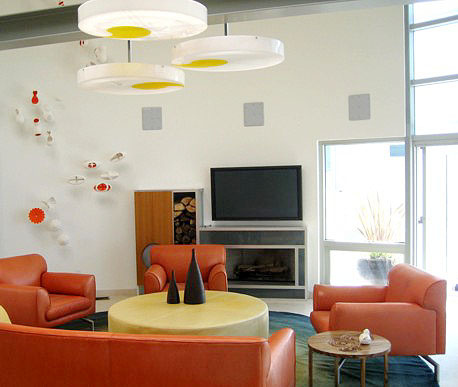 Especially for People Who Just Seeing Things From the good, and the regular can not adjust to one another between the furniture in the room. They just put anything they wanted and liked.
Regular parts not in what you have, but the room interior design of the arrangement is the existence of Good alignment and balance performance. New article so, the atmosphere of your house will look very harmonious.
Rabu, 10 November 2010
Room Interior Design
Basic Recipe For Interior Design In Any Room
By Lisa M Smith
 Think of room design like a movie. Movies have numerous components to keep us watching, if a director miss-casts the star, the plot gets lost or doesn't make sense we aren't interested. The same thing happens in a room. Every successful interior has component parts based on the following design principles which make up the room. If one of the principles is ignored the room will fail.
Texture: The physical or visual texture and item has plays an important role in design. Successful rooms feature a mix of textures, for example not all smooth or not all thick and nubby.
Color: All rooms have a color scheme based on an object (artwork), fabric or rug which is used as a roadmap to the colors allowable in the room. Something needs to define the relationship of the colors used in every room.
Scale: Scale relates to the absolute size and shape of items, visually or texturally.
Style: What is the vibe of how do you want a room to feel? Traditional, contemporary, mass-market, light and airy, cottage, French, etc.
Balance: Balance is a fundamental of life that everyone seeks, consciously or subconsciously. This makes us comfortable, gives us stability, reduces stress and gives us peace. This is the most important element to achieve when creating or changing the design of a room.
* Formal: Two equally sized sofas sitting exactly opposite one another in a room. One item or area is the mirror image of another.
* Informal: This is a bit trickier as it involves both the actual item and the "feel" of its presence in a space. Two equally sized chairs might sit across from one long sofa, the two chairs taking up pretty much the same physical space as the sofa.
Rhythm: This involves how the idea of movement unifies a space. One could use contrasts of light and dark or tall and short; repetition of similar objects; progression to or from a focal point; or how transitions of the implied shapes of pieces of furniture flow to one another.
Focal Point: Rooms or conversation areas generally have a focal point or area of emphasis. Too many focal points or "important" items make a room disorganized and unsettling.
Relationships: Every room tells a story using the previous principles. Before placing any item in a room or choosing a wall color one needs to consider how all the components of a room relate to one another. Consider the physical or color relationship of one item to another as well as the intellectual relationship.
This may sound like a lot but often for many people certain principles are intuitive. For whatever reason (engineering gene) men are readily able to detect balance. They may not articulate it as such but when they notice a room is off, it often has to do with balance. Equally though balance is the one component women have a tough time with executing, the shopping gene makes us falsely feel the fix is "more".
Intuitive or not all these principles can be easily understood to use as your own recipe for interior design success. Interior designers use these everyday to create beautiful rooms people enjoy. Use these interior design principles to create the movie (story) of your home interiors.
Lisa M. Smith is an interior designer and owner of Interior Design Factory, Ltd. and interior design blog DecorGirl.net. She specializes in creating beautiful and inviting interiors that are timeless and look collected, not like a showroom.
Real design for real people on any budget.
By Lisa M Smith
Think of room design like a movie. Movies have numerous components to keep us watching, if a director miss-casts the star, the plot gets lost or doesn't make sense we aren't interested. The same thing happens in a room. Every successful interior has component parts based on the following design principles which make up the room. If one of the principles is ignored the room will fail.Texture: The physical or visual texture and item has plays an important role in design. Successful rooms feature a mix of textures, for example not all smooth or not all thick and nubby.
Color: All rooms have a color scheme based on an object (artwork), fabric or rug which is used as a roadmap to the colors allowable in the room. Something needs to define the relationship of the colors used in every room.
Scale: Scale relates to the absolute size and shape of items, visually or texturally.
Style: What is the vibe of how do you want a room to feel? Traditional, contemporary, mass-market, light and airy, cottage, French, etc.
Balance: Balance is a fundamental of life that everyone seeks, consciously or subconsciously. This makes us comfortable, gives us stability, reduces stress and gives us peace. This is the most important element to achieve when creating or changing the design of a room.
* Formal: Two equally sized sofas sitting exactly opposite one another in a room. One item or area is the mirror image of another.
* Informal: This is a bit trickier as it involves both the actual item and the "feel" of its presence in a space. Two equally sized chairs might sit across from one long sofa, the two chairs taking up pretty much the same physical space as the sofa.
Rhythm: This involves how the idea of movement unifies a space. One could use contrasts of light and dark or tall and short; repetition of similar objects; progression to or from a focal point; or how transitions of the implied shapes of pieces of furniture flow to one another.
Focal Point: Rooms or conversation areas generally have a focal point or area of emphasis. Too many focal points or "important" items make a room disorganized and unsettling.
Relationships: Every room tells a story using the previous principles. Before placing any item in a room or choosing a wall color one needs to consider how all the components of a room relate to one another. Consider the physical or color relationship of one item to another as well as the intellectual relationship.
This may sound like a lot but often for many people certain principles are intuitive. For whatever reason (engineering gene) men are readily able to detect balance. They may not articulate it as such but when they notice a room is off, it often has to do with balance. Equally though balance is the one component women have a tough time with executing, the shopping gene makes us falsely feel the fix is "more".
Intuitive or not all these principles can be easily understood to use as your own recipe for interior design success. Interior designers use these everyday to create beautiful rooms people enjoy. Use these interior design principles to create the movie (story) of your home interiors.
Lisa M. Smith is an interior designer and owner of Interior Design Factory, Ltd. and interior design blog DecorGirl.net. She specializes in creating beautiful and inviting interiors that are timeless and look collected, not like a showroom.
Real design for real people on any budget.
Langganan:
Postingan (Atom)